CLIMATE CHANGE
Climate change is a material environmental topic for Repower that is relevant to its reputation. Greenhouse gas emissions at Repower stem from energy generation and the upstream and downstream supply chain.
Impacts
Repower’s greenhouse gas emissions stem in particular from energy generation and the upstream and downstream supply chain. A large proportion of the electricity generated is from hydropower, wind and solar assets. Repower also operates a gas-fired combined cycle power plant in Teverola. An important function of this facility is to ensure grid stability. However, this involves the emission of greenhouse gases. Further emissions arise along the supply chain, mainly from the sale of electricity and gas to end-consumers. However, Repower can also contribute to reducing emissions in its upstream and downstream supply chain by consciously managing purchasing and procurement, providing smart metering solutions and energy efficiency services, and expanding its electric transportation business.
Risks
Repower has voluntarily conducted an analysis of its climate-related risks and opportunities based on the Swiss Ordinance on Climate Reporting. The group has analysed what these are and how they will affect Repower (see TCFD content index). Climate change poses challenges for Repower that include both transition risks and physical risks. Rising CO2 prices could increase the costs of operating Teverola combined-cycle gas turbine power plant. Bottlenecks in raw materials and infrastructure could delay projects and increase costs. Even though all the necessary precautions are taken, a reputational risk cannot be ruled out, particularly in connection with direct emissions and emissions in the value chain. When it comes to physical risks, a distinction is made between chronic and acute risks. Chronic physical risks stem in particular from changing precipitation patterns, water scarcity and glacier melt. These chronic risks mainly affect the Repower Group’s hydropower generation. Acute physical risks such as extreme weather events can damage infrastructure. Periods of low wind can reduce the efficiency of wind turbines, and temporary water shortages due to droughts can lead to unexpected and unplanned losses of production.
Risks related to climate are a component of the Repower Group’s risk and control assessment (see Introduction).
Guidelines and due diligence
Repower Switzerland has an environmental management system certified to ISO 14001, which among other things defines processes and responsibilities for measuring greenhouse gas emissions annually. SET S.p.A., the operator of Teverola gas-fired combined cycle power plant, also has an ISO 14001-certified environmental management system and is registered with the European Eco-Management and Audit Scheme (EMAS). The Teverola plant is subject to the provisions of the European Greenhouse Gas Emission Trading System (ETS) and is legally obliged to offset its CO2 emissions. At the beginning of each three-year cycle, the management of plant also formulates an environmental programme and defines the most important measures under the environmental management system (see Water use).
Repower is on course
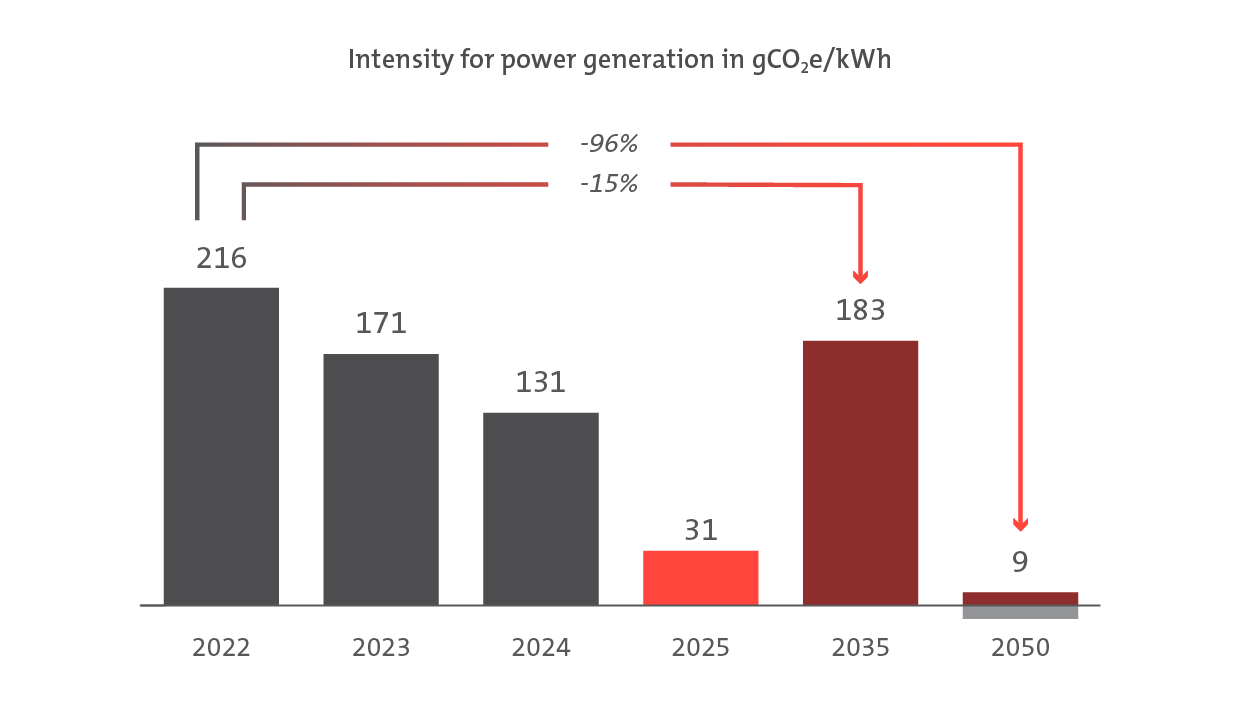
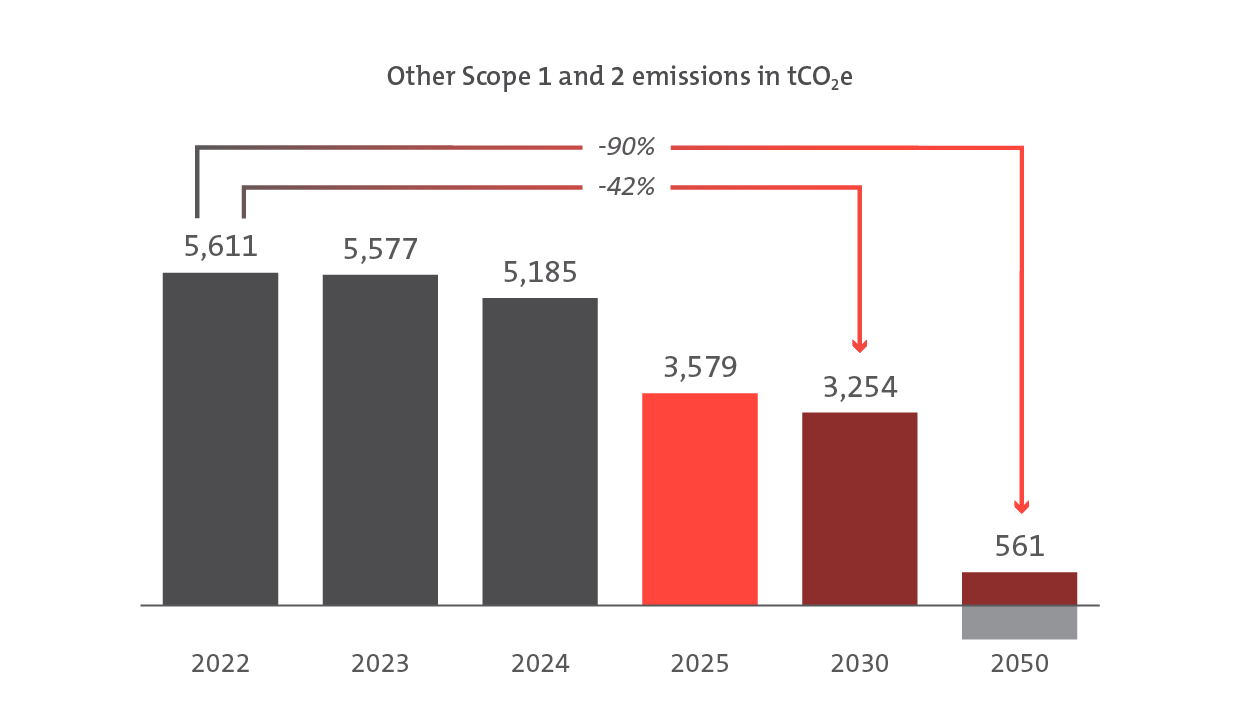
In 2024, the Repower Group set itself clear climate targets. These targets were approved by the board of directors. They were set realistically and are to be achieved through concrete measures and continuous monitoring.
Target intensity for power generation (Scope 1): In 2025, the emission intensity of electricity generation was already well below the target set for 2035. This reduction was mainly due to the very low amount of electricity generated by Teverola combined-cycle gas turbine power plant, which contributed only marginally to production owing in particular to a prolonged outage. Regardless of this one-time effect, Repower continues to pursue the intensity target for 2035 by expanding renewable generation capacity.
Absolute target for other Scope 1 and 2 emissions: Since the 2022 base year, Repower has recorded a steady reduction in other Scope 1 and Scope 2 emissions. The measures implemented to date are having an effect. These include the gradual electrification of the vehicle fleet and the use of renewable electricity to meet Repower’s own power requirements.
Measures
The Repower Group is investing in the expansion of renewables in Switzerland, Italy and Germany and at the same time is committed to maintaining and modernising existing power plants (see Energy transition).
To reduce traffic-related CO₂ emissions, Repower is gradually converting its own vehicle fleet to electric wherever it makes sense. In 2025, electric and hybrid vehicles accounted for 89 per cent of the Repower Group’s car fleet. Including special-purpose vehicles such as off-road and transport vehicles, the share was 58 per cent. In addition, Repower promotes sustainable mobility among its employees by contributing to public transport season tickets. Charging infrastructure for electric vehicles and bikes is also available at Repower sites.
At Repower Switzerland, a large part of the company’s own electricity requirements are covered by renewable energy. The energy used to compensate for grid losses also comes from renewable sources. In the medium term, the Repower Group aims to meet its entire electricity requirements with renewables.
Stakeholder engagement
When planning new projects or renovations, Repower Switzerland involves the relevant stakeholders at an early stage. Teverola combined-cycle gas turbine power plant publishes an updated environmental statement every year (see Water use). The electrification process at Repower takes place in collaboration with internal departments such as vehicle management and external partners such as Mobility.
Measuring effectiveness
The Repower Group measures its direct (Scope 1) and indirect (Scope 2 and 3) greenhouse gas emissions in accordance with the Greenhouse Gas Protocol (GHG Protocol) and the operational control approach. The base year is 2022. A detailed list of greenhouse gas emissions can be found in the Annex.
Direct greenhouse gas emissions (Scope 1): Direct greenhouse gas emissions account for 1.02 per cent of the Repower Group’s total emissions. Across the group they amounted to 31,878 tCO2eq in 2025; 95.40 per cent of this came from Teverola combined cycle gas turbine power plant. This represents a reduction of 84.89 per cent versus the prior year. This reduction is due to the fact that owing to multiple outages, the combined cycle gas turbine plant generated considerably less power in 2025. These outages resulted in downtime of around six months in total. In particular, a three-month outage in the summer was caused by a high-voltage cable failure; in January 2025, a critical incident involving the steam turbine led to a one-month shutdown; between April and May 2025, maintenance work was also carried out, some of which was scheduled and some of which involved the replacement of damaged components. It should also be noted that some of the downtime coincided with months of the year that are typically characterised by more favourable market conditions for trading. During the remaining months when the plant was available, it was therefore not in continuous operation, as market conditions were not consistently profitable.
Energy indirect greenhouse gas emissions (Scope 2): Energy indirect greenhouse gas emissions account for 0.08 per cent of the Repower Group’s total emissions. Market-based emissions came to 2,571 tCO2e in 2025. This represents a reduction of 41.37 per cent versus the prior year.
Other indirect greenhouse gas emissions (Scope 3): Indirect (Scope 3) emissions account for 98.90 per cent of the Repower Group’s total emissions. In 2025 they came to 3,094,301 tCO2e. A large part of these emissions stem from the sale of electricity and gas to end-consumers.
|
in tonnes CO 2 e |
2025 |
2024 |
2023 |
2022 |
|
|
|
|
|
|
|
Direct emissions (Scope 1) |
31,878 |
211,026 |
258,736 |
340,881 |
|
Indirect energy-related emissions (Scope 2, market-based) |
2,571 |
4,385 |
4,580 |
4,498 |
|
Other indirect emissions (Scope 3) |
3,094,301 |
3,552,232 |
3,000,483 |
2,956,812 |
|
Total |
3,128,750 |
3,767,643 |
3,263,799 |
3,302,191 |